How Big the Universe Really Is
The universe is so big that your brain cannot truly picture it. Right now, light from distant stars is traveling toward us, but most of it will never reach Earth. The universe is not just large, it is growing bigger every single second.
Here is the quick answer. The part of the cosmos we can see stretches about 93 billion light-years across. That means a beam of light, moving at 186,000 miles every second, would take 93 billion years to cross it. Beyond that boundary lies even more space that we might never see.
Start With Our Local Neighborhood
To understand these wild distances, we have to start at home. Earth feels giant when you walk outside. It takes about 15 hours to fly around the world in a fast plane. That is a long trip for us, but it is nothing to the cosmos.
Moon light takes just over one second to reach your eyes. The Sun sits 93 million miles away. Its bright light needs eight minutes to travel to Earth. If the Sun went dark right now, you would not know for eight full minutes. That is how far away our own star is.
Next comes our whole Solar System. A space probe named Voyager 1 left Earth back in 1977. It has been zooming away from us for almost 50 years, moving at 38,000 miles per hour. Yet, it has barely left our front yard. It is still less than one light-day away from home.
Counting Stars in the Milky Way
Our Sun is just one star among billions. All these stars sit inside a giant spinning wheel called the Milky Way galaxy. You can see part of it on a clear night as a pale stripe of light across the sky.
How many stars are in our galaxy? Scientists estimate there are at least 100 billion stars in the Milky Way alone. Some guesses go as high as 400 billion. If you sat down and counted one star every second without stopping to sleep, it would take you more than 3,000 years just to count them all.
Crossing our galaxy takes time. Light needs 100,000 years to travel from one side of the Milky Way to the other. Think about that for a second. The light you see from a star on the far edge of our galaxy left that star when early humans were still living in caves.
How Many Galaxies Are Out There?
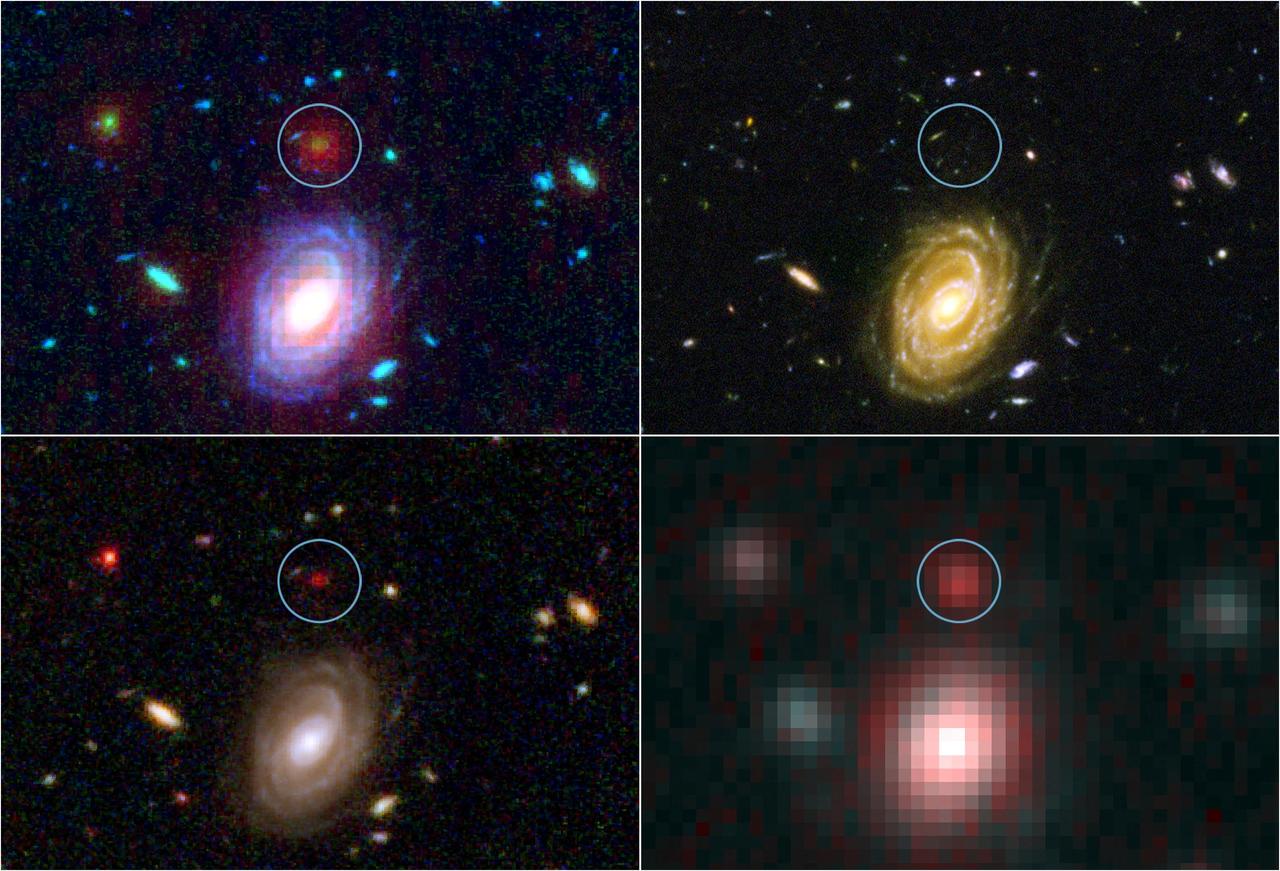
For a long time, people thought our galaxy was the whole thing. Then scientists pointed powerful space telescopes at a tiny, dark patch of sky. The patch looked totally empty. It was as small as a pinhead held at arm's length.
The telescope left its lens open for days to scoop up faint light. When the picture came back, it showed thousands of colorful spots. Every single spot was not a star, but a whole galaxy filled with its own billions of stars. It changed how we see everything.
Scientists now calculate that the visible cosmic space holds at least two trillion galaxies. Two trillion. If every galaxy were a single grain of sand, you could fill a large room with them. Each grain would be a home for hundreds of billions of suns and planets.
How Big Is the Observable Universe?
People often ask, how big is the universe really? The answer depends on what you mean by the word. We have to divide the answer into two parts: what we can see, and what exists beyond our sight.
The observable part is a giant sphere centered on Earth. It is about 93 billion light-years across. You might wonder how it can be 93 billion light-years wide if the cosmos is only 13.8 billion years old. Light should only have traveled 13.8 billion light-years, right?
The secret is space expansion. Space itself has been stretching out like a rubber band ever since it started. While light traveled toward us, the space between objects grew larger. That stretching pushes the visible edge out to 93 billion light-years in total size. To check up on health news down on Earth while contemplating space, check out the CDC Reports New Measles Cases and Outbreaks Across US page.
What Lies Beyond the Edge?
We cannot see past the edge of the visible cosmos. The light from those farther regions has not had enough time to reach Earth yet. Space is stretching so fast that light from very distant places will never catch up to us.
What is out there past the boundary? Most scientists think space just keeps going. It might be endless. If you flew in a fast rocket past our visible edge, you would just find more galaxies, more stars, and more planets, forever.
According to the science on the whole Universe, space could actually be infinite. If it never ends, then every possible arrangement of matter happens somewhere out there. That means there could be an infinite number of worlds, some very much like ours.
Why Does Space Stretch So Fast?
Space is not just a dark box that holds things. Space is a real thing that can stretch, bend, and grow. In 1929, an astronomer named Edwin Hubble noticed something strange. Nearby galaxies were moving away from us, and far galaxies were rushing away even faster.
Think of a loaf of raisin bread baking in an oven. As the dough cooks, it grows bigger. The raisins do not swim through the dough on their own. They move apart because the bread between them is expanding. Galaxies are like those raisins.
Today, space grows faster every day. A mysterious push called dark energy causes this speed up. It works like a motor pushing galaxies apart faster and faster as time goes by.
Empty Space Is Not Really Empty
When you look up, the gaps between stars look totally blank. It seems like nothing lives in the wide spots between galaxies. The truth is quite different and very strange.
Most of the space out there is cold and very empty. In the deep voids between galaxies, you might only find one single atom of gas in a box the size of a house. Compare that to Earth, where one small breath of air holds trillions of gas atoms.
Yet, even that empty room has energy humming inside it. Tiny particles pop into sight and disappear in fractions of a second. The cosmos is full of hidden activity even in the dark. You can read more about how scientists study these strange facts on USA News Time for more space news and updates.
A Simple Scale to Show the Distance
Numbers with twelve zeros are hard to wrap your head around. Let us shrink everything down to human scale so your brain can grab hold of it.
Imagine Earth is squeezed down to the size of a tiny grain of salt. On that same scale, the Moon would be a tinier speck located one inch away. The Sun would be the size of a small orange, sitting 30 feet away from your salt grain.
Pluto would be 1,200 feet down the road. The very next star, Proxima Centauri, would sit 1,600 miles away. That is like standing in New York and placing a star in Denver. And that is just to reach the very first star outside our solar home.
Putting It All Together
Feeling small right now is totally normal. Our planet is one tiny blue rock circling one average star. That star sits in one galaxy among trillions in a space that never stops growing.
Yet, think about how amazing it is that we can figure this out. Humans sit on a small rock, look up at the night sky, and work out how the vast cosmos operates. We built glass lenses and space mirrors to map out light that traveled for billions of years just to hit our eyes.
Next time you walk outside at night, look up at a blank spot in the dark. Remember that your eyes are drinking in light from thousands of distant galaxies, each home to billions of suns. What part of this giant cosmic puzzle surprises you the most?


Comments
Post a Comment